Modular Workstations & 5S Workplace Organisation for Malaysian Factories
On a lean shop floor, the workstation is where 5S either works or falls apart. A well-configured modular workstation makes the right tools obvious, the wrong ones absent, and the standard visible at a glance. For Malaysian manufacturers running 5S or lean programmes, the station design directly affects takt time and quality.
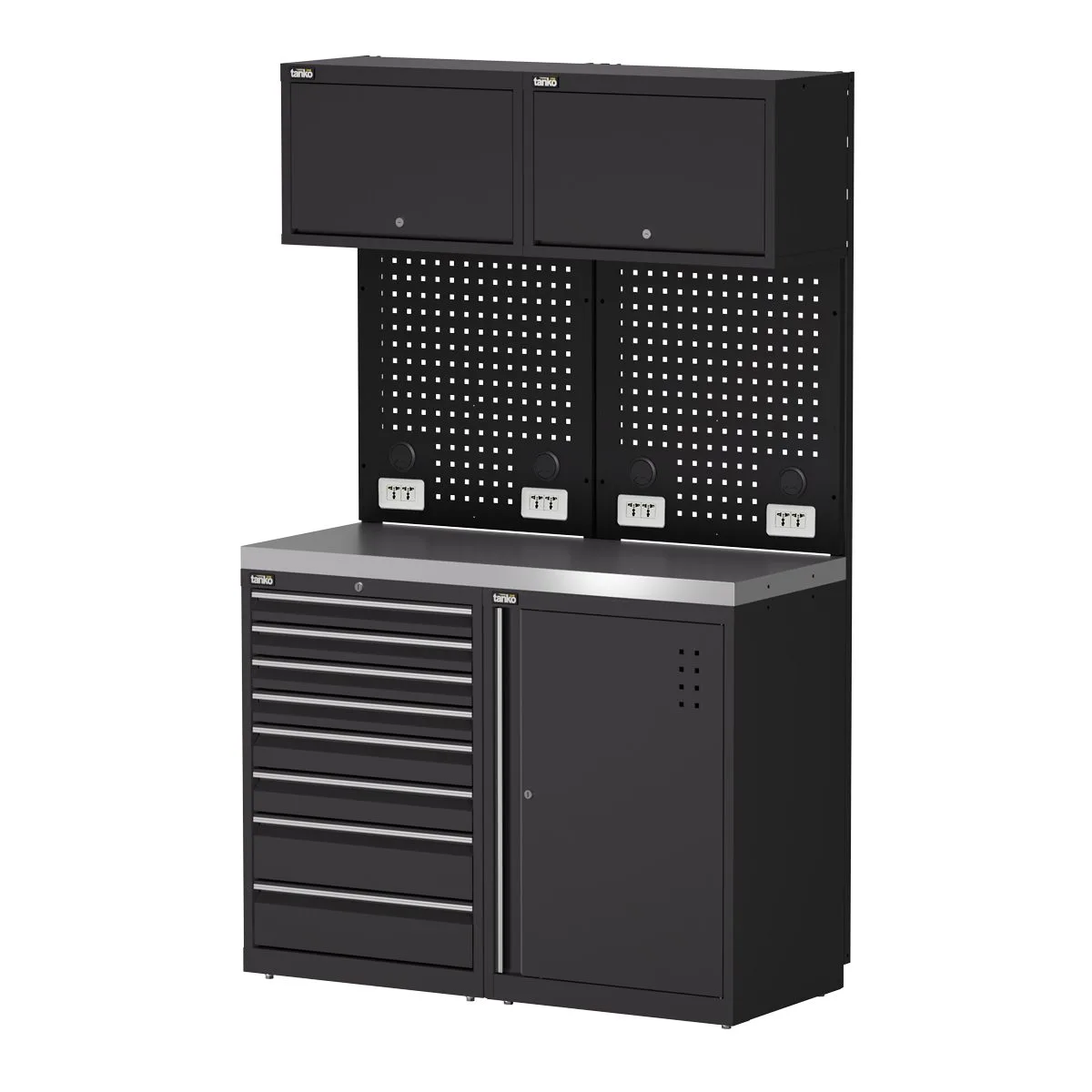
What is a modular workstation?
A modular workstation is a work surface built on a common frame that accepts add-ons — drawer units, pegboards, overhead shelves, task lighting and power rails. Unlike a fixed bench, it is reconfigured as the process changes. Tanko's Classic and Professional workstation lines are built this way.
How workstations support each S of 5S
- Sort — drawer units and bins give a home to only the tools the station needs, making the excess obvious.
- Set in order — pegboards and shadow boards put every tool in a fixed, labelled position within reach.
- Shine — a clear, sealed surface is easy to wipe down and inspect.
- Standardise — identical stations across a line make the standard visible and training faster.
- Sustain — a missing tool shows instantly against its shadow, so drift is caught early.
Direct answer: To support 5S, configure each workstation so every tool has a labelled home within arm's reach — usually a pegboard or shadow board plus a small drawer set — and keep stations identical across a line so the standard is visible and audits are fast.
Configuring a workstation that improves flow
- Reach zones. Put the most-used tools and parts in the primary reach zone; secondary items on overhead shelves or lower drawers.
- Point-of-use power. Socket rails at the surface remove trailing leads and let the operator work safely.
- Lighting. Task lighting reduces defects on detailed assembly and inspection.
- Shadow boarding. A perforated board with tool outlines makes a missing tool obvious and speeds returns.
ESD and special environments
For electronics and E&E work — a major Malaysian sector — an ESD-safe surface and grounding protect sensitive components. For wet or chemical processes, a stainless surface is the right call. Match the top to the process, not the other way round.
Standardising a line
The productivity gain from workstations comes from making them identical. When every station on a line has the same layout, operators can move between positions, training is quicker, and 5S audits become a visual check rather than a paperwork exercise.
Pricing note: Workstation pricing depends on the frame, surface and accessories you configure. Describe your process and we'll quote a standard station you can roll out across a line.
Frequently asked questions
How do modular workstations support 5S?
They give every tool a fixed, labelled home within reach (Set in order), make excess tools obvious (Sort), provide a clean surface to inspect (Shine), let you standardise identical stations across a line, and — with shadow boards — make a missing tool visible so the standard is sustained.
What is shadow boarding?
Shadow boarding is outlining each tool's shape on a pegboard or panel so its correct position is obvious. A missing tool leaves a visible gap, which speeds returns and makes 5S audits a quick visual check.
Can workstations be ESD-safe for electronics work?
Yes. For electronics and E&E assembly, workstations can be configured with an ESD-safe surface and grounding to protect sensitive components. Match the surface to the process — stainless for wet or chemical work, ESD for electronics.
Why standardise workstations across a production line?
Identical stations let operators move between positions, make training faster, and turn 5S audits into a visual check. Standardisation is where most of the productivity gain from modular workstations comes from.
Sourcing in Malaysia? Primaxs is the exclusive Malaysia distributor for Tanko industrial storage. Browse the product range or request a quote for your workshop or factory.