
Heavy Duty Workbenches Malaysia | Fabrication Welding Guide
A fabrication shop's workbench takes punishment a light-duty bench would never survive: heavy parts dropped on the surface, clamping loads, hammer blows and the constant vibration of grinding. The difference between a bench that lasts a decade and one that racks within a year is in the load rating, the top thickness and the frame design. This guide covers how Malaysian fabrication, welding and maintenance workshops specify heavy-duty benches.
Start with the load rating
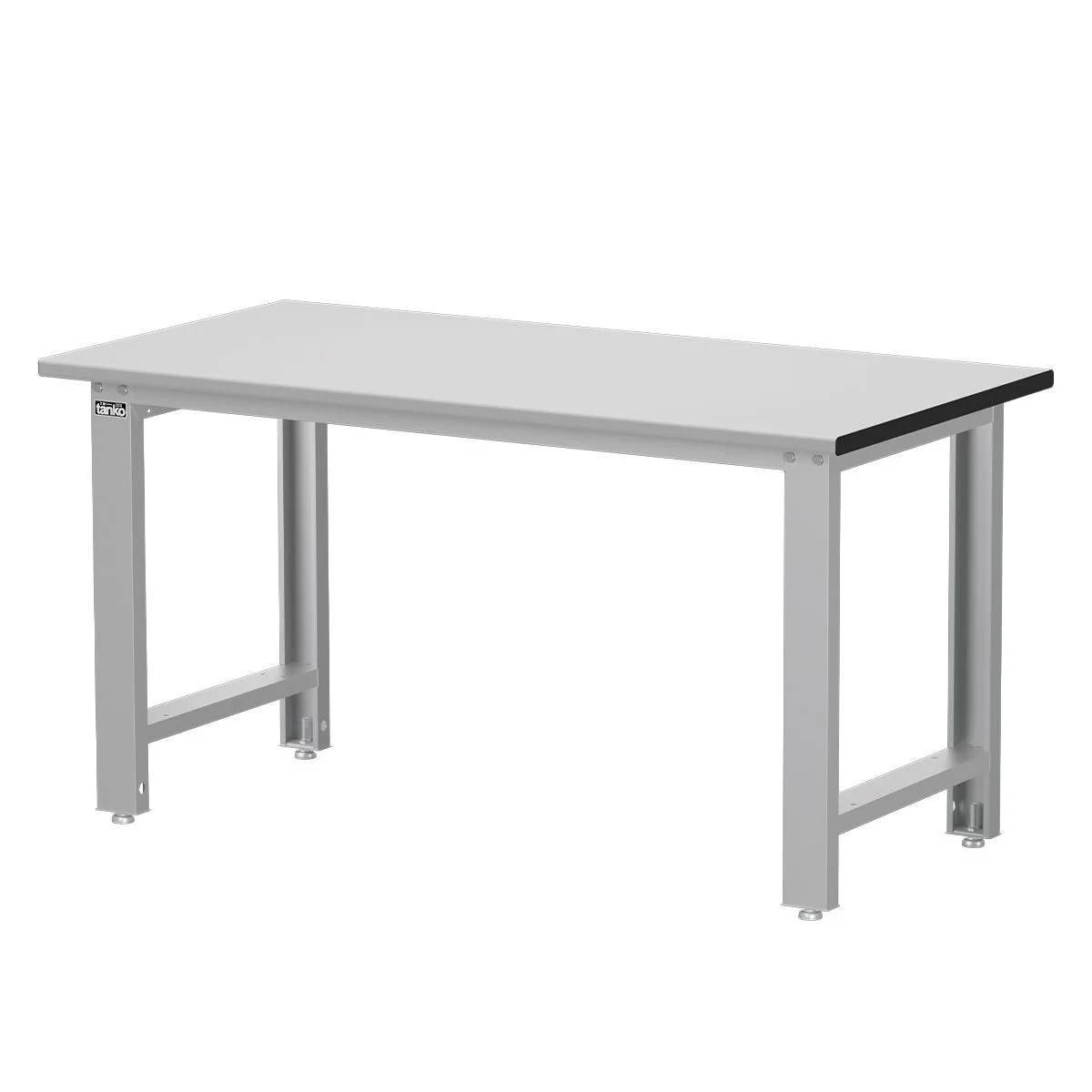
Duty rating is the first decision and the one most often underestimated. A heavy-duty workbench is rated for the heaviest realistic load it must carry — think about the biggest single workpiece, not the average. Typical heavy-duty ratings start around several hundred kilograms of distributed load, with the frame and top sized to absorb it without flex. If you regularly work on large components or stack materials on the bench, size up.
The top: thickness is the story
On a heavy-duty bench, the top does real work. A thick steel top (commonly 3–5 mm and up) resists denting, spreads clamping loads and gives a solid surface for hammering and grinding. Rubber tops suit impact-heavy mechanical work; steel tops suit fabrication where the surface must take abuse. Wood or MDF tops are lighter-duty and have no place on a fabrication bench. The mounting of the top to the frame matters too — a thick top bolted to a rigid frame behaves as one solid unit, where a thin top on a light frame flexes and racks.
Frame rigidity and vibration
Welding, grinding and hammering send vibration through the bench. A heavy-duty frame — thick square or box-section steel legs with proper gussets and cross-bracing — keeps the surface steady so work doesn't bounce and measurements stay true. Leveling feet matter on uneven workshop floors: an adjustable foot lets you bed the bench down so it doesn't rock under load. Casters, where needed, should be heavy-duty with locks; a bench on light casters is a hazard under heavy work.
Bench dogs, vises and accessories
Fabrication benches earn their keep through accessories. A bench dog (peg) system and a machined slot or stop let you clamp workpieces firmly at the edge. A heavy vice needs a reinforced mounting zone — bolt it through the top into the frame, not just into sheet steel. Consider whether the position needs a tool rail, a parts tray, or a lower shelf for storage without compromising leg room.
Welding bays: ground and shield
In a welding bay, the bench is also part of the electrical and fire-safety picture. A steel top provides a grounded work surface (ensure the frame is properly earthed), and a steel top resists weld spatter better than coated or wooden surfaces. Keep a steel bench clear of flammables and use it with the workshop's ventilation and fire controls. If grinding and welding share the position, a heavier top and a clean, unobstructed surface are worth the investment.
Direct answer: For a fabrication or welding bench in Malaysia, specify a heavy-duty steel-frame workbench with a thick steel top (3–5 mm or more), fully welded and braced frame, adjustable leveling feet, and reinforced mounting for your vice. Size the load rating for the heaviest workpiece you handle, not the average.
Maintenance bays: organisation alongside strength
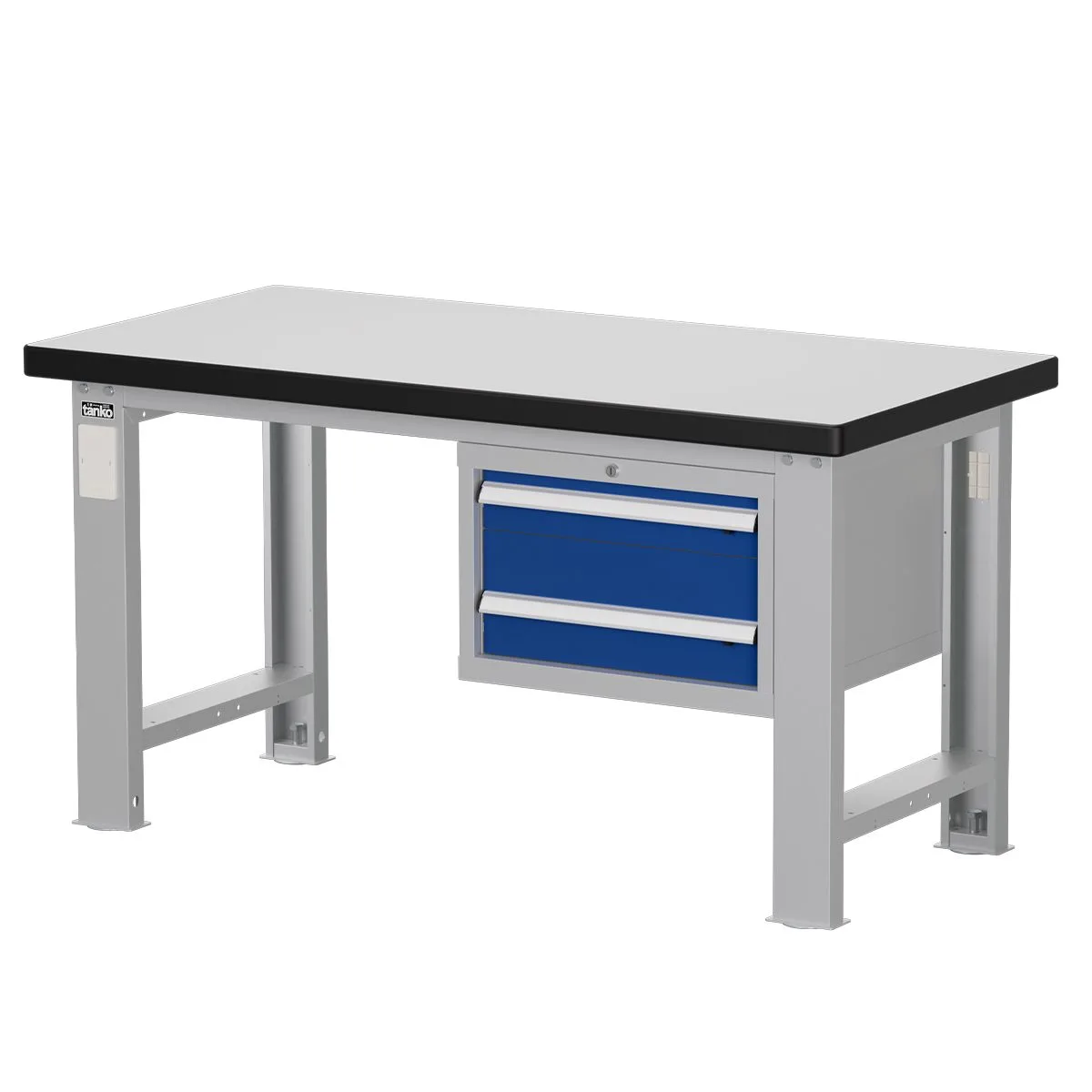
A maintenance workshop bench usually needs more than a strong surface — it needs storage in arm's reach. Pair a heavy-duty bench with a mobile tool cabinet for the technician's everyday tools, a small-parts cabinet for fasteners and consumables, and a perforated board behind the bench for shadow-boarded hand tools. This combination keeps the strong surface clear of clutter, which is both safer and faster to work on.
Specifying across a workshop
Workshops rarely need one bench — a fabrication bay, a welding station, a maintenance position and a light assembly bench have different needs. The workbench range covers duty ratings from light to heavy, so you can standardise on one supplier across the shop floor and match each position to its actual task. Request a quote with the number of positions and the heaviest load at each, and the proposal will match bench to job.
Frequently asked questions
How much weight can a heavy-duty workbench hold?
It depends on the model's rating — heavy-duty benches are typically rated for several hundred kilograms of distributed load, with the frame and top designed to carry the heaviest workpiece without flex. Confirm the rated load against your biggest part before ordering.
Steel or rubber top for a fabrication bench?
For fabrication, hammering and clamping, a thick steel top is the standard choice — it resists dents and spreads loads. Rubber tops suit impact-heavy mechanical work where you want to protect the workpiece or dampen vibration.
Do I need casters on a heavy-duty bench?
Only if the bench must move between positions. If you need mobility, choose heavy-duty locking casters sized for the full load; if the bench stays put, fixed leveling feet give better stability and are safer under heavy work.
Can a standard bench be upgraded to heavy duty?
Not reliably — duty rating comes from the frame, the top thickness and how they are joined, not from accessories. Spec a bench that is heavy-duty from the start for fabrication, welding and maintenance positions.
Sourcing in Malaysia? Primaxs is the exclusive Malaysia distributor for Tanko industrial storage. Browse the product range or request a quote for your workshop or factory.