How to Choose a Workbench for Your Malaysian Workshop
A workbench is the most-used piece of equipment on most shop floors, and the one most often bought wrong. Three decisions determine whether it lasts: duty rating, top material and size. Get those right and the rest is accessories.
Decision 1: Duty rating
Duty rating is the load the bench is engineered to carry safely. The rule is simple: rate for the heaviest realistic load at that position, not the average, and then leave headroom.
- Light to medium duty — electronics, inspection, light assembly, packing.
- Heavy duty — mechanical assembly, engine and gearbox work, anything involving hammering, pressing or heavy fixtures.
Under-rating is the most expensive mistake because the fix is a full replacement. If a position sits between two ratings, choose the heavier one.
Decision 2: Top material
The worksurface is chosen for the task and the environment, not for looks. This is the single most task-specific choice on the bench:
| Top | Best for | Watch out for |
|---|---|---|
| Rubber | Mechanical work — absorbs impact, protects dropped parts, non-slip | Not for solvents or open flame |
| Laminate | Clean assembly, inspection, general benchwork | Can scorch or cut; not for heavy hammering |
| Stainless steel | Wet areas, chemicals, food contact, cleanrooms | Shows scratches; higher cost |
| Steel top | Heavy abuse, welding-adjacent, maximum durability | Hard on dropped parts; can be noisy |
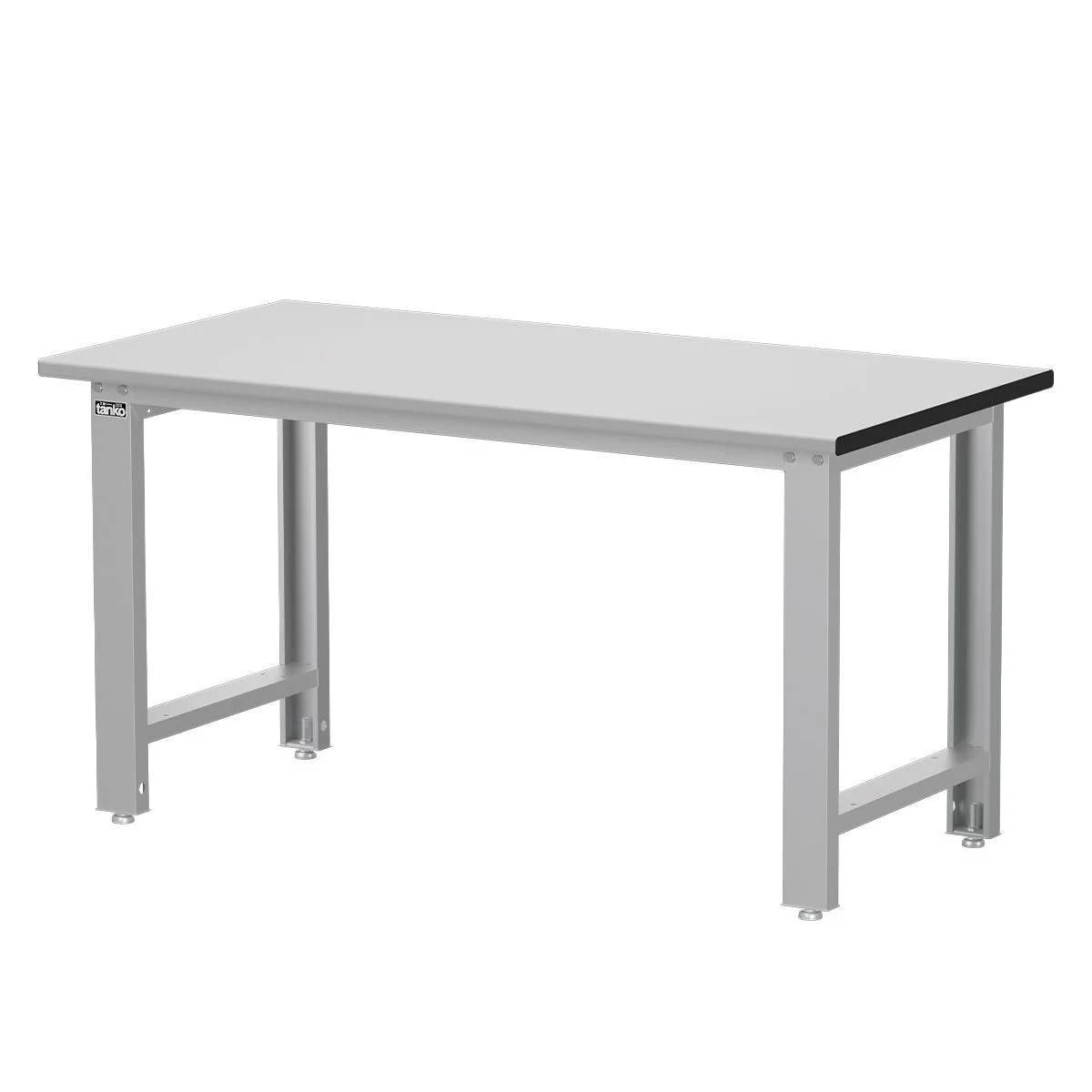
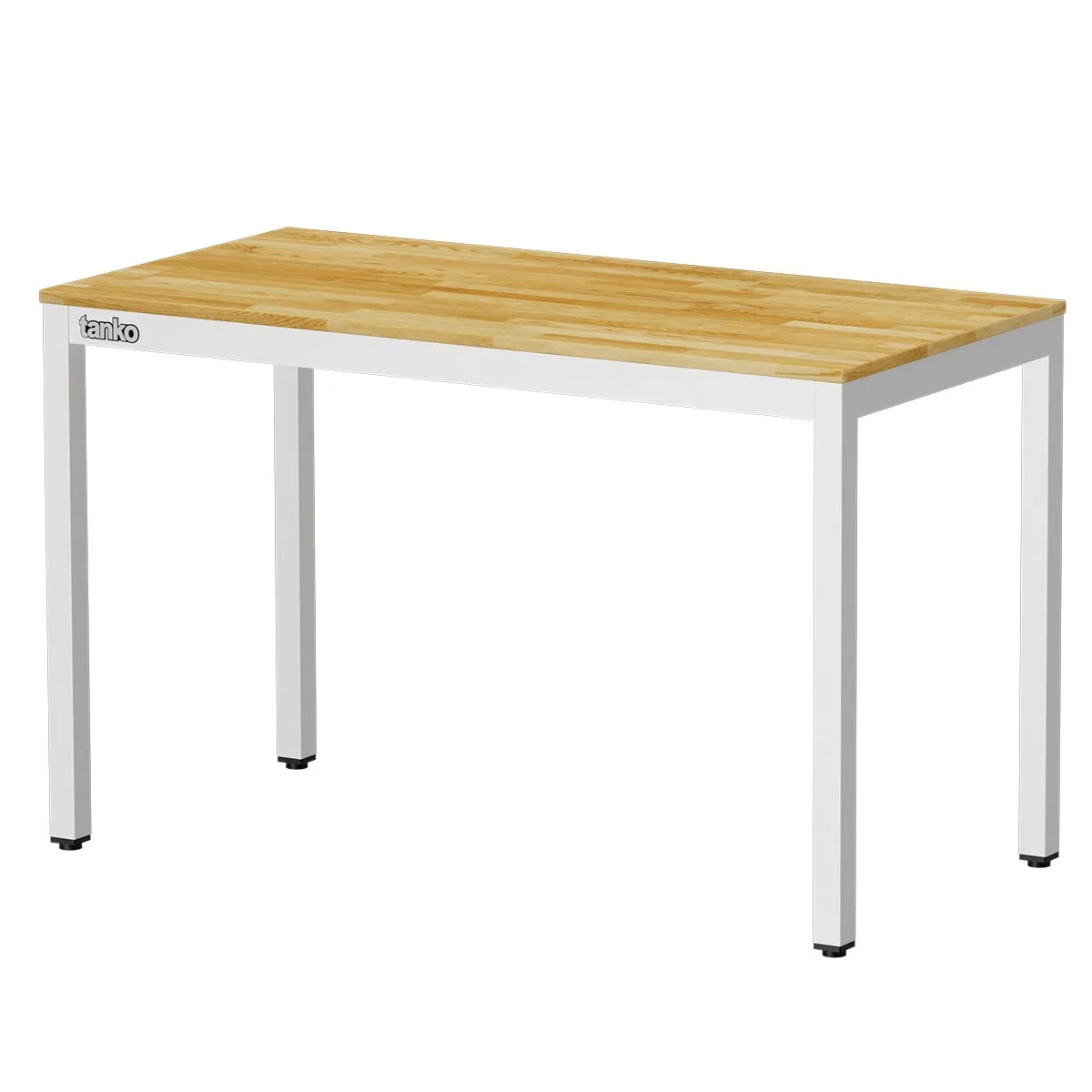
Tanko encodes the top material in the model suffix, so a single bench line is available in several surfaces. For example, within the heavy-duty workbench range you can compare the same frame with a rubber top, a laminate top or a stainless-steel top and pick per position. This is why we build a page for every variant — so you can specify the exact surface you need.
Direct answer: For a general Malaysian workshop, a heavy-duty frame with a rubber top handles mechanical work best. Choose stainless steel only where there is water, chemicals or food contact, and laminate where the work is clean and light.
Decision 3: Size and layout
Bench width is driven by the work envelope plus the tools and fixtures that live on the surface. Common industrial widths run from around 1200 mm for a single-operator station up to 2100 mm for larger assemblies. Depth affects reach and whether a pegboard and shelf can sit at the back without crowding the work. Height should suit the task and the operator — seated precision work, standing assembly and heavy lifting each favour a different working height; the workbench height guide gives the numbers.
Accessories that earn their place
- Perforated board (pegboard) — puts frequently used hand tools within arm's reach and supports shadow-boarding for tool control. See the perforated board range.
- Drawer units — keep the surface clear; specify a mix of shallow and deep drawers.
- Overhead shelf and lighting — recover surface space and reduce eye strain on detailed work.
- Power and socket rails — safe power at the point of use instead of trailing leads.
On modular lines these bolt onto a common frame, so a bench can start simple and grow. For heavily configured positions, look at modular workstations instead of a plain bench.
A quick specifying checklist
- Heaviest load at the position → sets duty rating (round up).
- Task and environment → sets top material.
- Work envelope + on-surface tooling → sets width and depth.
- Operator and task → sets working height.
- Tool access and clutter → decides pegboard, drawers, shelf, power.
Pricing note: Workbench pricing depends on the frame, top material, size and accessories you choose, so we quote to your specification rather than list a single price. Tell us the position and we will recommend a configuration and quote it.
Frequently asked questions
What size workbench do I need?
Size to the work envelope plus the tools and fixtures that stay on the surface. Single-operator stations commonly start around 1200 mm wide; larger assemblies use up to about 2100 mm. Leave depth for a pegboard and shelf at the back if you need them.
Which workbench top is best for a mechanical workshop?
A rubber top is usually best for mechanical work — it absorbs impact, protects dropped parts and resists slipping. Use a steel top where the bench takes very heavy abuse, and stainless steel only where there is water, chemicals or food contact.
What does the letter in a Tanko workbench model number mean?
Tanko encodes the top material and panel configuration in the model suffix, so one bench line appears as several variants. That lets you order the exact surface — rubber, laminate, stainless or steel — for each position rather than a one-size top.
Can I add a pegboard and drawers later?
On modular lines, yes. The frame accepts pegboards, drawer units, shelves, lighting and power rails, so you can start with a basic bench and add accessories as the work changes.
Sourcing in Malaysia? Primaxs is the exclusive Malaysia distributor for Tanko industrial storage. Browse the product range or request a quote for your workshop or factory.