Steel Locker Buying Guide for Malaysian Factories, Gyms & Campuses
Steel lockers look simple, but the wrong specification creates daily friction — lost keys, damp interiors, too few compartments. For Malaysian factories, gyms and campuses, three decisions cover almost everything: compartment count, lock type and ventilation.
How many compartments?
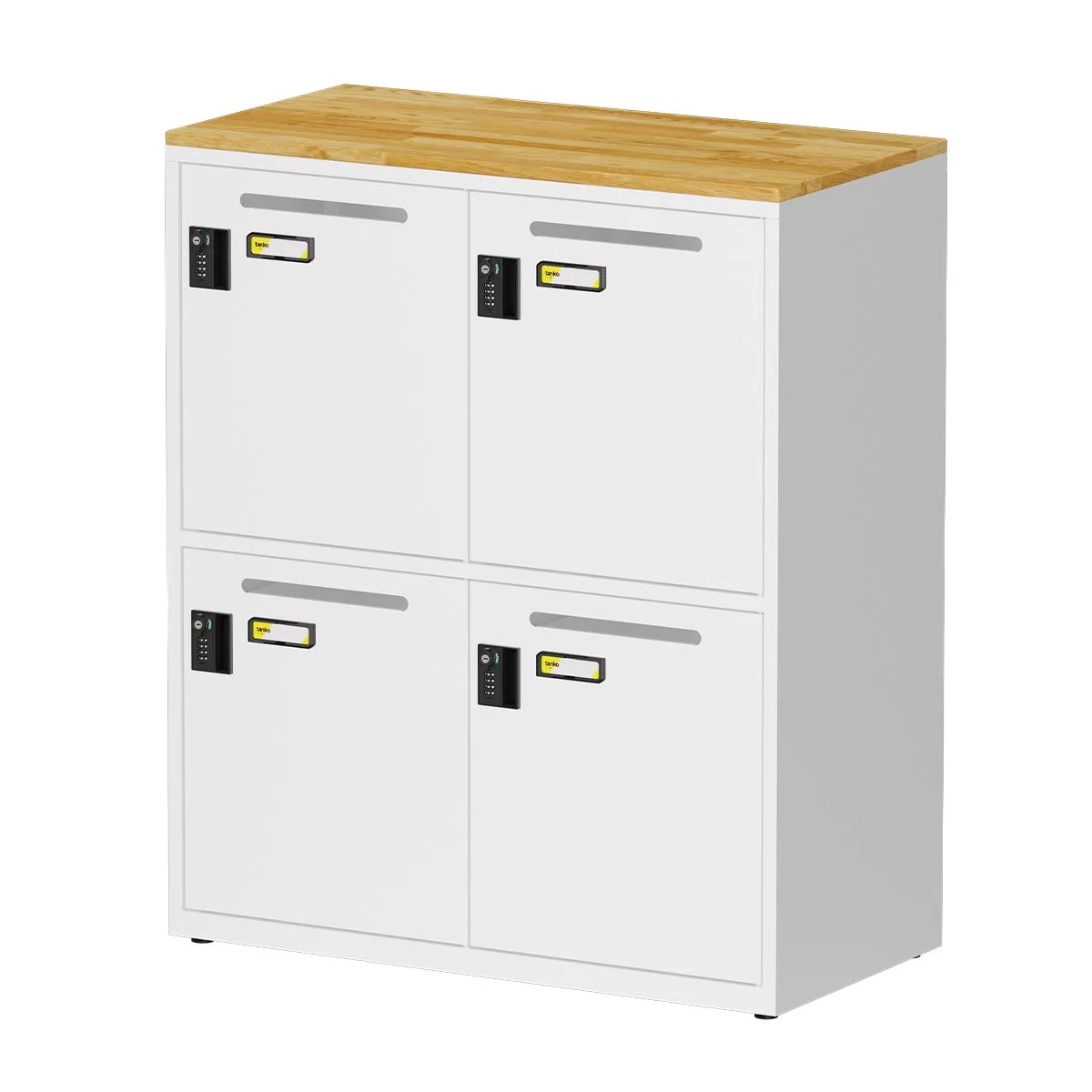
Locker banks are specified by the number of compartments per column and the total footprint. The right count depends on shift patterns and what is being stored:
- Fewer, larger compartments — where staff store bags, helmets or bulky PPE.
- More, smaller compartments — for shift-based teams where many people need a small personal space, such as phone-and-wallet lockers.
Tanko's steel locker range is configured by storage-unit count so you can match the bank to headcount and space.
Direct answer: Size lockers to your peak headcount per shift and what people actually store. For shift teams sharing lockers, choose more small compartments with combination locks; for personal assignment, fewer larger compartments with key locks.
Combination lock or key lock?
| Lock type | Best for | Trade-off |
|---|---|---|
| Combination lock | Shift-based and shared use — no keys to manage or lose | Codes must be reset between users |
| Key lock | Fixed personal assignment | Key management and replacement burden |
For most factory and campus settings with rotating staff, combination locks remove the key-management headache. Fixed personal lockers — offices, long-term staff — suit key locks.
Ventilation and humidity
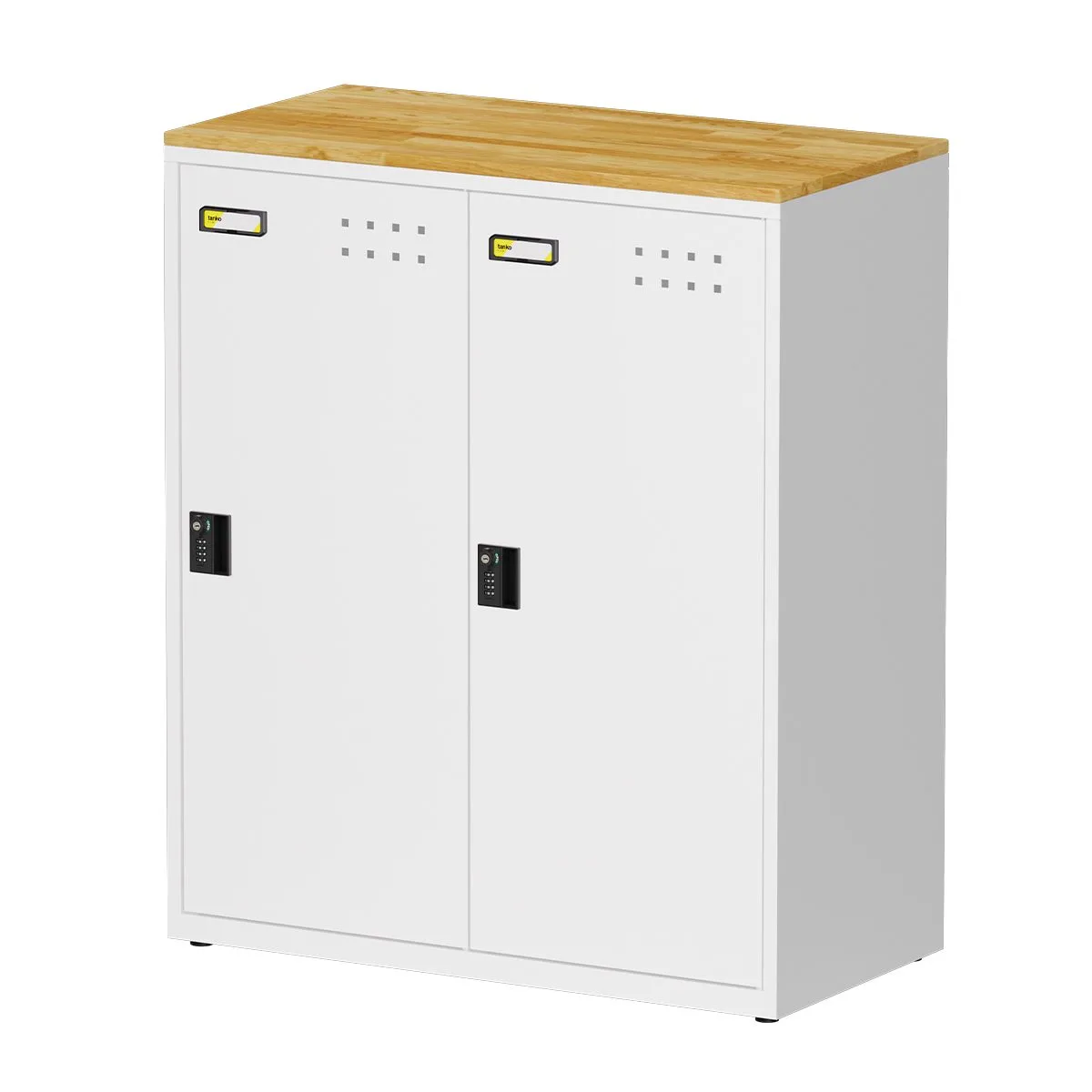
This is the detail most buyers overlook, and it matters in Malaysia. Enclosed steel lockers storing damp PPE, uniforms or gym kit will develop odour and condensation without airflow. Ventilated doors let interiors breathe and dry between uses. If lockers store wet or sweaty items, prioritise ventilation.
Placement and durability
- Powder-coated steel resists knocks and cleans easily in industrial settings.
- Leave clearance for doors to open fully in the aisle.
- Sloping tops prevent items being piled on top and collecting dust where hygiene matters.
Where lockers are used in Malaysia
- Factories — PPE, uniforms and personal items at shift change.
- Gyms and sports facilities — member and staff day-use storage.
- Campuses and schools — student and staff storage in changing rooms and technical areas.
Worker hostels: the Act 446 locker size rule
If the lockers are for employer-provided accommodation, there is a legal minimum. The Employees’ Minimum Standards of Housing, Accommodations and Amenities (Accommodation and Centralised Accommodation) Regulations 2020, in force since 1 September 2020, require each worker to have their own locked cupboard of at least 0.35 m × 0.35 m × 0.9 m for valuables, passport included. It is one per worker, not one per room.
That rules out most multi-tier lockers. A three-column bank is about 272 mm wide inside each door, and a four-door bank is under 800 mm high per compartment, so neither meets it. In the Tanko range only the two-door models, FBA-202W and FBB-202, do. The locker size and price table lists the inside dimensions of every model so you can check before you order.
Direct answer: For a worker hostel, buy lockers whose individual compartment is at least 350 mm wide, 350 mm deep and 900 mm high, one per worker. “JTK-approved locker” in a listing is not a certification; JTK certifies the accommodation, so measure the compartment.
Pricing note: Locker pricing depends on compartment count, lock type and quantity. Every model's published price and compartment size is in the locker table; tell us your headcount and we'll quote a locker bank to suit.
Ordering lockers as part of a new plant and hostel? The new factory fit-out checklist puts them in sequence with the rest of the fit-out, so hostel lockers are in before residents arrive.
Frequently asked questions
How do I choose the number of locker compartments?
Match compartments to your peak headcount per shift and what people store. Shift teams sharing lockers need more small compartments; staff storing bulky PPE or bags need fewer larger ones.
Are combination locks or key locks better for lockers?
Combination locks suit shift-based and shared use because there are no keys to manage or lose — you reset the code between users. Key locks suit fixed personal assignment. For rotating factory or campus staff, combination locks are usually easier to run.
Do steel lockers need ventilation in Malaysia?
Yes, especially where they store damp PPE, uniforms or gym kit. In Malaysia's humidity, enclosed lockers without airflow develop odour and condensation. Ventilated doors let interiors dry between uses.
Where can I buy steel lockers in Malaysia?
Primaxs supplies Tanko steel lockers across Malaysia in a range of compartment counts and lock types, with local stock and bulk quoting for factories, gyms and campuses.
Do worker hostel lockers have a minimum size in Malaysia?
Yes. Since 1 September 2020 the accommodation regulations under Act 446 require each worker in employer-provided accommodation to have their own locked cupboard of at least 0.35 m by 0.35 m by 0.9 m. Most multi-tier lockers are too narrow or too short; in the Tanko range the two-door FBA-202W and FBB-202 meet it.
Sourcing in Malaysia? Primaxs is the exclusive Malaysia distributor for Tanko industrial storage. Browse the product range or request a quote for your workshop or factory.