
ESD & Anti-Static Workbenches in Malaysia: A Specifier's Guide
Electrostatic discharge is the quiet killer of electronics. A component that is fine at the bench can be damaged by a discharge it never visibly shows, then fail weeks later in the field. For Malaysian electronics assembly, EMS and repair facilities — where humidity swings make static charge build-up worse — an ESD workbench is a control point, not an accessory. This guide covers how to specify one properly.
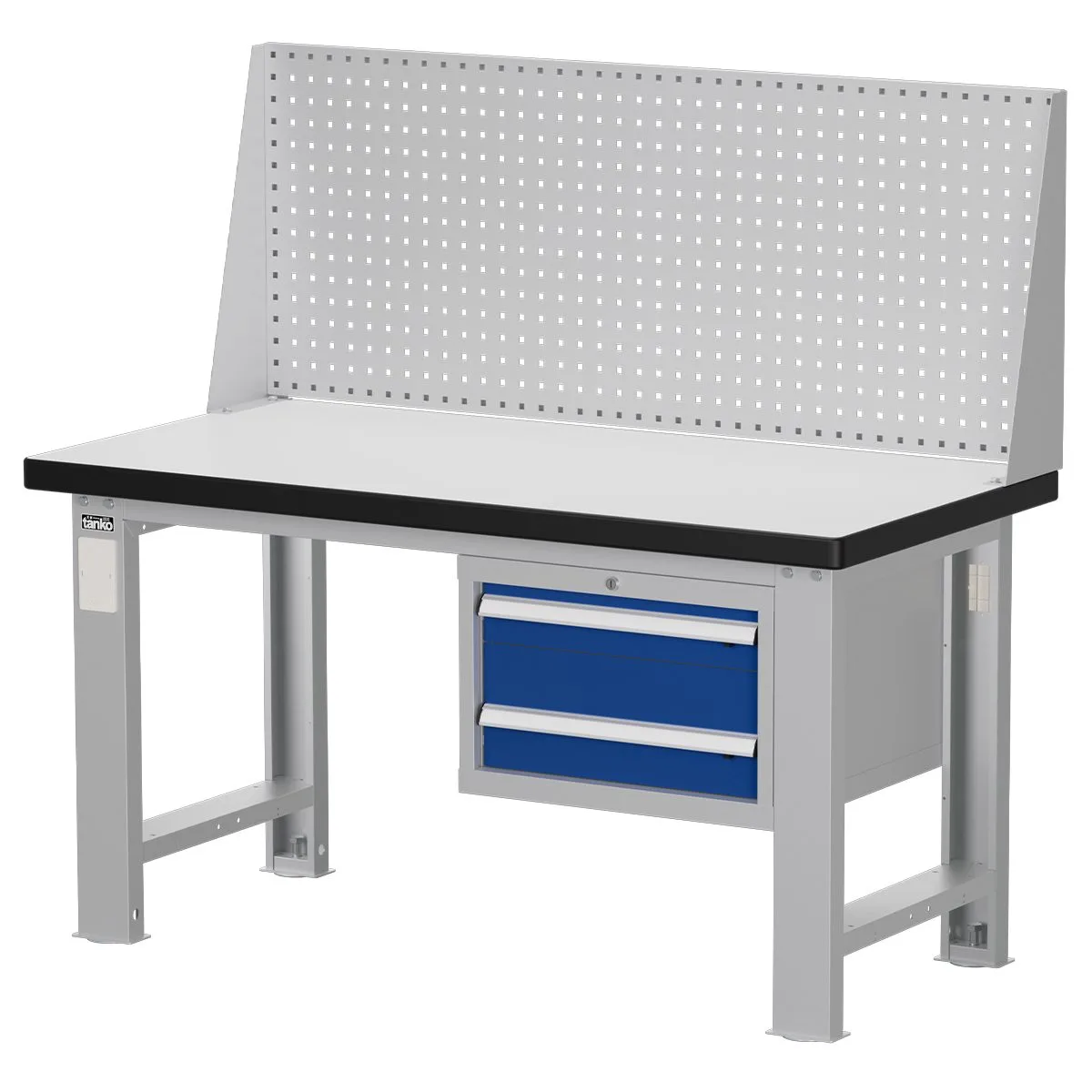
Why Malaysian electronics shops need ESD benches
Static charge builds faster in air-conditioned rooms with low humidity, which is exactly the environment in most Malaysian electronics lines. A technician walking across a carpeted area, or handling a PCB in dry conditioned air, can carry several thousand volts. That charge transfers the moment the component touches an unprotected surface. The result is latent damage that shows up as field returns, higher rework rates and warranty costs.
An ESD workstation gives every discharge a safe path to ground through a controlled chain: a grounded bench, a dissipative surface, a wrist strap and a common point ground. When specified and wired correctly, the chain protects boards from the moment they arrive at the position.
The five elements of a proper ESD workstation
- ESD-safe work surface. A dissipative or conductive top (typically 10^6–10^9 ohms surface resistance) that bleeds charge slowly instead of sparking. Laminate and rubber ESD tops are the two common choices.
- Grounding cord set. The surface connects to a common point ground through a 1 MΩ resistor, protecting operators from the current path if they touch a live line.
- Wrist strap and coil cord. The operator's body is grounded through the strap; the coiled cord keeps the connection short and out of the way.
- Common point ground (CPG). A single hard-ground point that bonds the surface, wrist strap and any mat — one ground, not several, so no potential difference exists between them.
- ESD-safe storage nearby. Dissipative bins, drawer liners and conductive foam for holding boards and components that are not being worked on.
Grounding: the part that is easy to get wrong
The bench itself is only half the story — the grounding chain is what makes it ESD-safe. The common mistake is assuming an 'ESD bench' is automatically grounded. It is not. The surface must be wired to a common point ground through a 1 MΩ cord, and the ground must be a verified earth (a mains earth or dedicated ESD ground), not a random metal point.
Specify that the grounding cord set is included with the bench, and that the workstation has an obvious wrist-strap jack. For multi-position lines, plan a per-position CPG so each operator is independently protected. This is also what auditors check: a certified ESD workstation should be verifiable with a surface-resistance tester and a wrist-strap tester.
Direct answer: For an ESD workstation in Malaysia, start with a grounded steel-frame workbench with a dissipative laminate or rubber top, a 1 MΩ grounding cord set to a common point ground, and a wrist-strap jack at each position. Add ESD-safe bins and drawer liners for storage, and test the chain with a surface-resistance tester before first use.
Choosing the top material
- ESD laminate tops suit clean electronics assembly — a hard, smooth dissipative surface that wipes down easily and resists solvents used in rework.
- ESD rubber tops add impact and thermal protection, useful at soldering and rework positions, and provide a compliant dissipative surface for heavier handling.
- Stainless-steel ESD options are used in cleaner or more hygienic environments where the surface must also resist corrosion and frequent sanitising.
Whatever the top, pair it with the rest of the grounding chain. A dissipative surface without a ground cord is no safer than a bare steel top.
Workstation layout for an assembly line
Plan each ESD position as a complete cell: a bench with the right height and depth for seated or standing assembly, a shelf or pegboard for tools (kept ESD-safe where they contact boards), task lighting, and a nearby dissipative bin for work-in-progress. Cable management under the bench keeps the area clean, which matters in an audit. For batch production, match the number of positions to the line speed so boards never wait unprotected on a bare surface.
Where ESD benches sit in the wider range
An ESD workstation is usually built on the same modular frame as the broader workbench range, so it integrates with the rest of your shop-floor storage — tool tool cabinets alongside the line, small-parts storage for components, and perforated boards for shadow-boarded hand tools. Specifying the whole line from one supplier keeps the grounding philosophy consistent.
Verify before you commit
Ask any supplier three questions: what is the surface resistance of the top, is the grounding cord set included, and can the workstation pass an on-site ESD audit with a tester? The answers separate a genuine ESD workstation from a standard bench with an 'ESD' label. Request a quote through the site and include your expected headcount and line length so the proposal covers the full grounding plan.
Frequently asked questions
What is the difference between ESD and anti-static?
Anti-static broadly means materials that resist charge build-up; ESD-safe is a stricter spec covering the controlled dissipation of charge through a grounded chain. For electronics assembly you want ESD-safe workstations with a verifiable grounding path, not just anti-static materials.
Do I really need a wrist strap if the bench is grounded?
Yes. The grounded surface protects the board when it is on the bench, but the operator's body is a separate charge source. The wrist strap grounds the operator so both the person and the surface are at the same potential — one without the other leaves part of the chain ungrounded.
How often should ESD workstations be tested?
Best practice is daily or shift-start wrist-strap tests and periodic (weekly to monthly) surface-resistance checks, depending on your ESD programme and audit requirements. A simple tester gives a pass/fail reading in seconds.
Can a standard workbench be converted to ESD?
Sometimes, with an ESD top, grounding cord set and wrist-strap kit fitted to a compatible steel frame — but a purpose-specified ESD workstation ensures the surface, ground chain and jack are matched and testable from day one.
Sourcing in Malaysia? Primaxs is the exclusive Malaysia distributor for Tanko industrial storage. Browse the product range or request a quote for your workshop or factory.