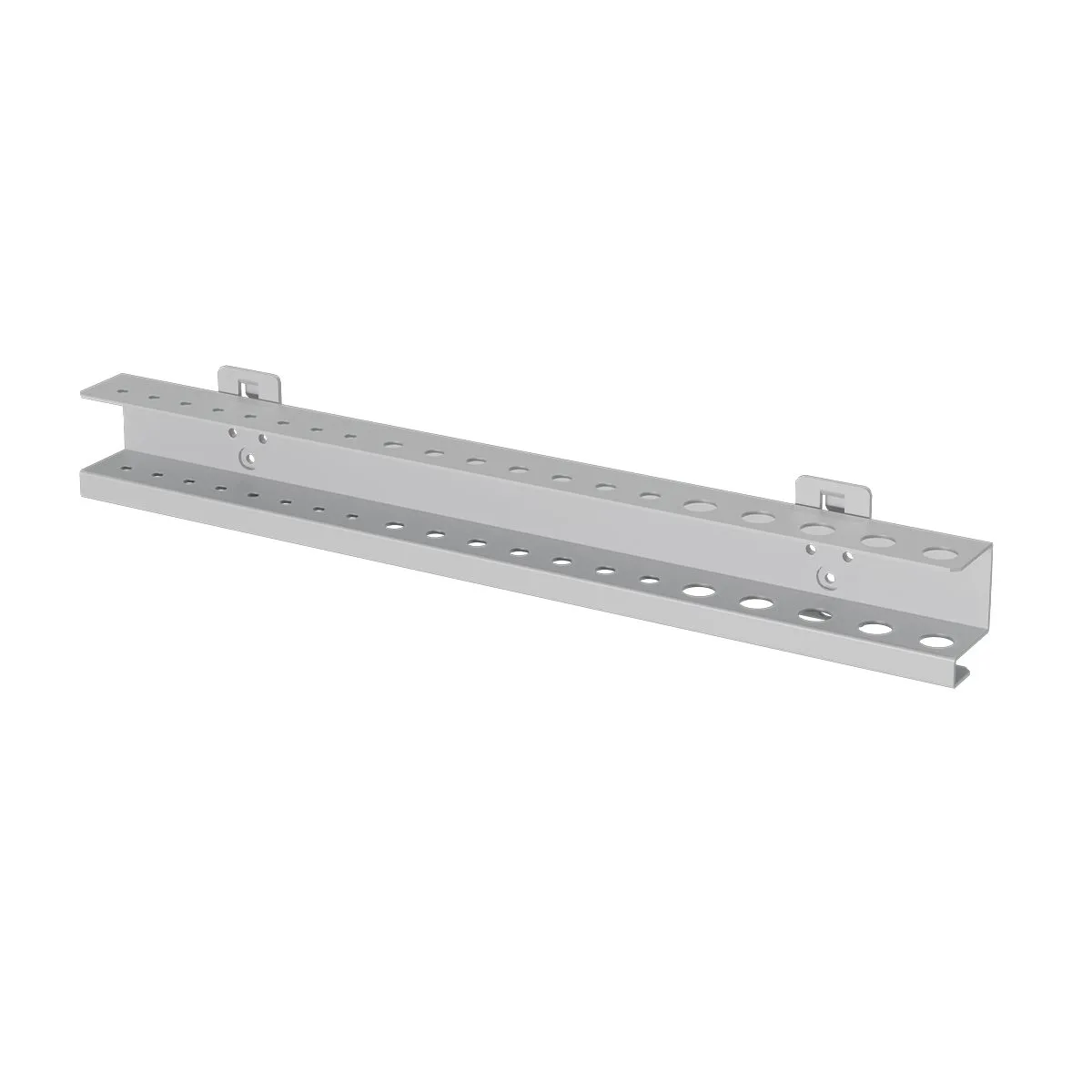
Hanger Racks & Louvre Panels for Bin Storage
Fixed shelving fossilises whatever your part mix looked like on the day it was installed. Six months later the fast movers are on the bottom shelf, the slow movers own the eye line, and the picker walks that difference several hundred times a day. A hanger rack fixes that by letting bins move anywhere on the panel face.
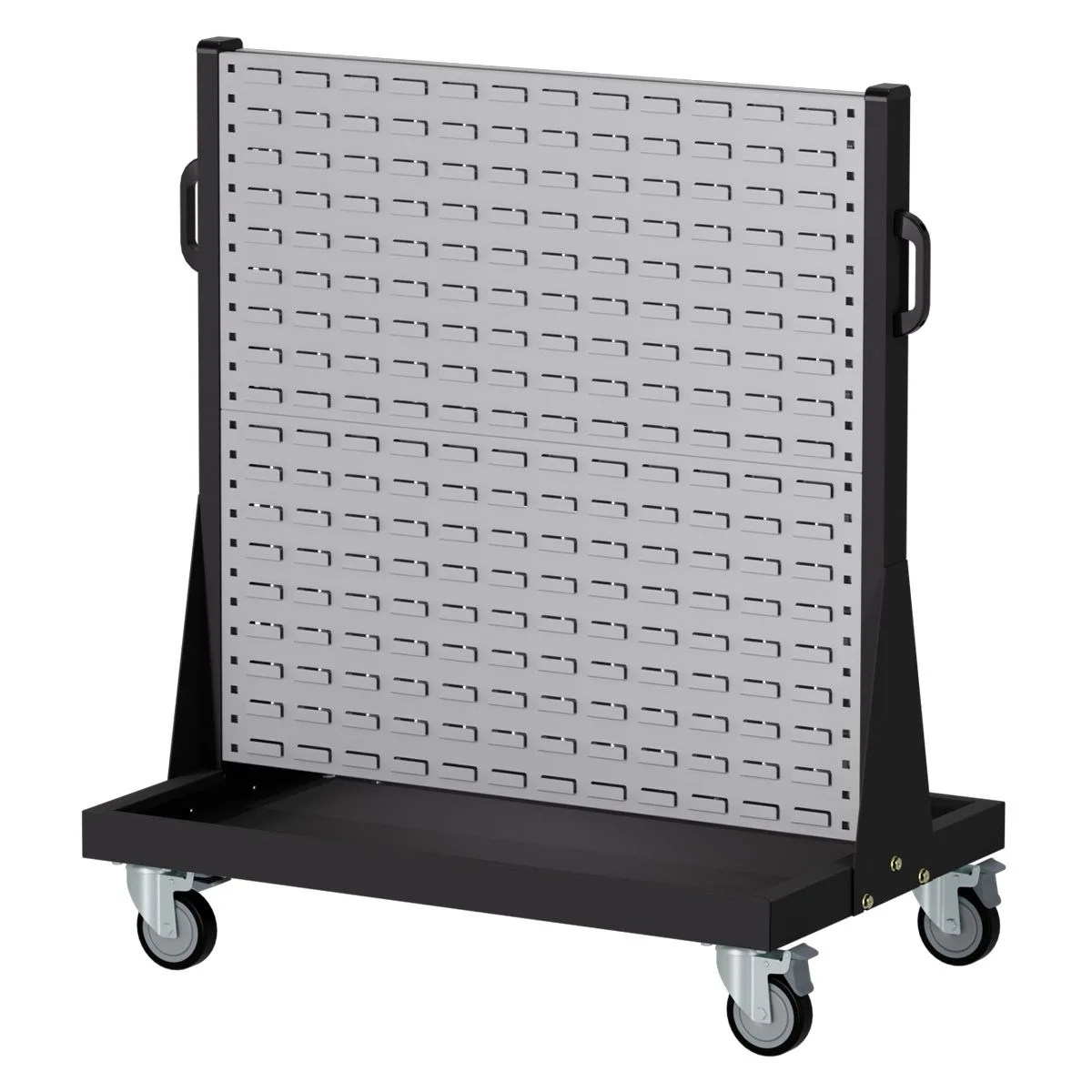
What is a hanger rack?
A hanger rack is a steel frame carrying louvre panels, perforated panels, or a mix of both. Louvre panels have angled slots that hold plastic bins; perforated panels have a hole pattern that takes hooks and holders. The frame decides where it lives: fixed to a wall, free-standing on a foot, or on castors as a mobile hanger rack. Tanko’s hanger rack range covers all three.
Mobile, free-standing or wall-fixed
| Type | Use it when |
|---|---|
| Mobile (castors) | The work moves — line changeovers, maintenance rounds, kitting trolleys that follow a job |
| Free-standing | A picking face in the middle of a floor, or where you cannot drill the wall. Double-sided doubles the face without doubling the footprint |
| Wall-fixed | A permanent station where floor space is the constraint |
Direct answer: if the rack serves one fixed station, fix it to the wall. If it serves a line that gets rebalanced, buy it mobile the first time — retrofitting castors to a fixed frame is not a job anyone enjoys.
Hanger display stands
The same frame sold into a showroom or a trade counter is usually asked for as a hanger display stand. Mechanically it is the identical product: panels, hooks and a base. The difference is what hangs on it and whether customers see it. If it is customer-facing, the double-sided free-standing version earns its floor space twice.
How many panels do you actually need?
Count the bins first, not the panels. Work out how many part numbers live at the station, choose the bin size for the largest of them, and let that set the panel count — not the other way round. A rack bought a panel short gets overloaded within a month; a rack bought two panels long costs almost nothing extra and absorbs the next product change.
Configurations in the Tanko range run from four panels to six, in louvre, perforated, or mixed sets, so a rack can carry bins on one face and hooks on the other.
One hole pitch across the range
Tanko uses a single hole pitch across its panels, which matters more than it sounds. A hook, shelf, bin hanger or drill holder bought today still fits a panel bought years ago, and the same accessory moves between a hanger rack, a workbench upright and a perforated board on the wall. You are buying into a system rather than a single product.
Frequently asked questions
What is the difference between a hanger rack and a perforated board?
A perforated board is the panel itself, usually fixed to a wall or a workbench upright. A hanger rack is a free-standing or mobile frame that carries those panels, so it can be moved and can be double-sided.
Can a hanger rack be moved between stations?
The mobile versions run on castors and are built to be moved daily. Free-standing and wall-fixed versions are not — choose the mobile frame up front if the rack needs to follow the work.
Do the bins come with the rack?
Panels and bins are specified separately, so the bin size can be matched to your part mix. Send us the part numbers per station and we will quote the bin sizes and counts with the rack.
Are hanger racks available double-sided?
Yes. Double-sided frames carry panels on both faces, which roughly doubles the picking face for the same floor area. It is the usual choice for a rack standing in the middle of a floor rather than against a wall.
Sourcing in Malaysia? Primaxs is the exclusive Malaysia distributor for Tanko industrial storage. Browse the product range or request a quote for your workshop or factory.